
Your inner world matters
When you don’t understand what exactly you’re going through, finding the right answers can feel overwhelming.
Himmah brings together ruqyah, psychology and neuroscience to help you explore the human experience from a deeper perspective.
What Himmah offers to empower you
At Himmah, we believe meaningful change begins when you are given the space to be heard, understood and supported. Our services are designed to meet you where you are and walk with you towards a greater understanding of yourself, your circumstances and the path ahead.
-
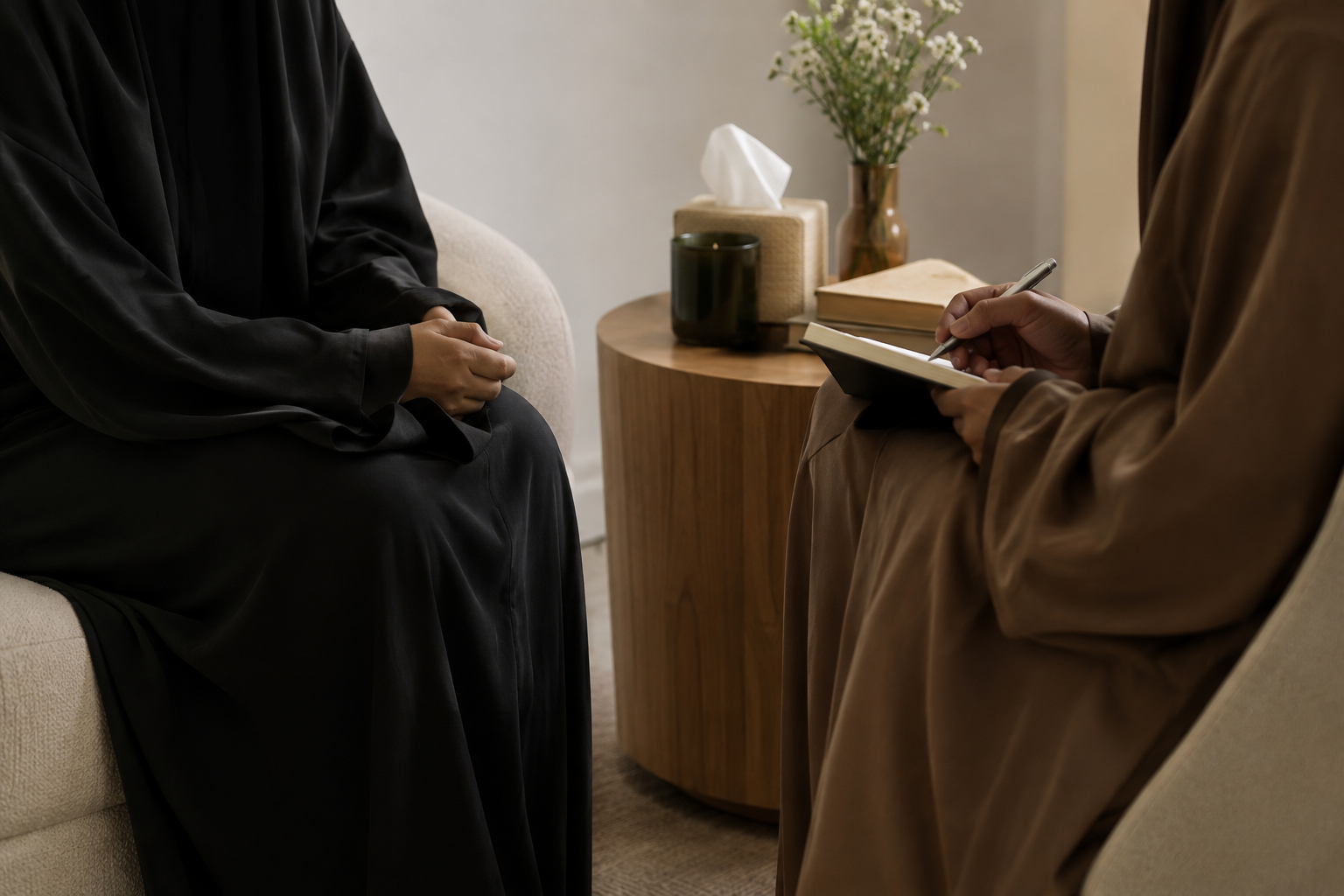
Private, personalised spiritual care anchored in the Qur’ān and Sunnah, with the understanding that healing is ultimately from Allāh. Your experience is unique, and so is our approach. Consultations offer a calm and confidential space to talk through what you have been experiencing, ask questions without judgement and receive guidance tailored to your circumstances.
-
Personalised guidance for those seeking support in their spiritual, personal or intellectual development. Sometimes, what we need is a space where we can slow down, speak honestly, be heard and make sense of where we are going. Mentoring provides that space.
-
Coming soon.
Himmah will offer structured training and educational opportunities in areas connected to our work, including ruqyah, Islamic psychology and related fields.
We want our training to be more than the transfer of information. We want it to open something within you, giving you a deeper understanding of your faith, yourself and the human experience, while equipping you with knowledge that can genuinely shape the way you think, live and support others.
Our aim is to create learning experiences that are personal, thoughtful and transformative, making beneficial knowledge accessible while nurturing greater insight, spiritual awareness and a sense of purpose.
We know that there’s more to you than what meets the eye
Allāh created us with depth, purpose and meaning, yet understanding ourselves and the experiences that shape us is rarely simple. At Himmah, we believe that meaningful exploration begins with asking better questions, seeking beneficial knowledge and remaining conscious of the One who created us.
Our work is guided by three principles:
‘Ilm
Knowledge or ‘ilm is where our journey begins. We seek to understand the human being in all their complexity—mind, body, soul and circumstance—drawing from the richness of our Islamic tradition alongside contemporary fields of knowledge. We ask difficult questions, listen carefully and remain open to what deeper study may reveal. For us, knowledge is not simply something to possess; it should enrich the way we understand ourselves, broaden our view of others, and shape how we serve those around us.
Rifq
Behind every question is a person, and behind every struggle is a story. Gentleness or rifq to us means creating a space where people can feel heard and dignified rather than reduced to a symptom, diagnosis or experience.
Through spiritual care, mentoring and meaningful human connection, we seek to accompany people with gentleness and respect, recognising their individual circumstances while remaining grounded in the values of our dīn.
‘Amal
Understanding should move us to action or ‘amal. What we learn should not remain on the page, but find its way into how we serve, support and respond to the needs around us.
Through education, advocacy, research and direct care, we seek to turn knowledge into something tangible—something that benefits people and strengthens our Ummah.
For us, every insight carries the possibility of becoming a meaningful contribution, and every step forward should lead to action that matters.
Our current research areas
Some experiences leave questions that cannot be answered from the surface alone. Our work looks closely at the relationship between the mind, soul, body and the circumstances that shape a person’s life, drawing upon Islamic scholarship alongside contemporary fields of study.
We gather insight from those who live these realities including ruqyah patients who voluntarily take part in our studies, former detainees, people affected by psychological trauma, as well as practitioners, academics and other professionals.
By bringing these voices together, we seek to illuminate overlooked realities, identify where support falls short, and develop knowledge that can strengthen how we serve, protect and advocate for our Ummah.
“How can ruqyah and spiritual illness be understood alongside contemporary neuroscience to better understand their psychological and neurophysiological processes?”
Our research looks at Islamic understandings of ruqyah and spiritual illness alongside modern psychology and neuroscience. We explore people’s experiences and responses to ruqyah, and ask how each perspective may help us understand the psychological and physical processes involved.
We do not aim to explain spiritual experiences purely through neuroscience, or to use neuroscience as proof of spiritual claims. Instead, we bring these perspectives into dialogue to explore where they overlap, where they differ, and what each can teach us about the human being.
For example, we may explore what happens to the body and mind during ruqyah, how people respond emotionally or physically to Qur’ānic recitation, and how factors such as fear, expectation, memory, stress and attention may influence a person’s experience.

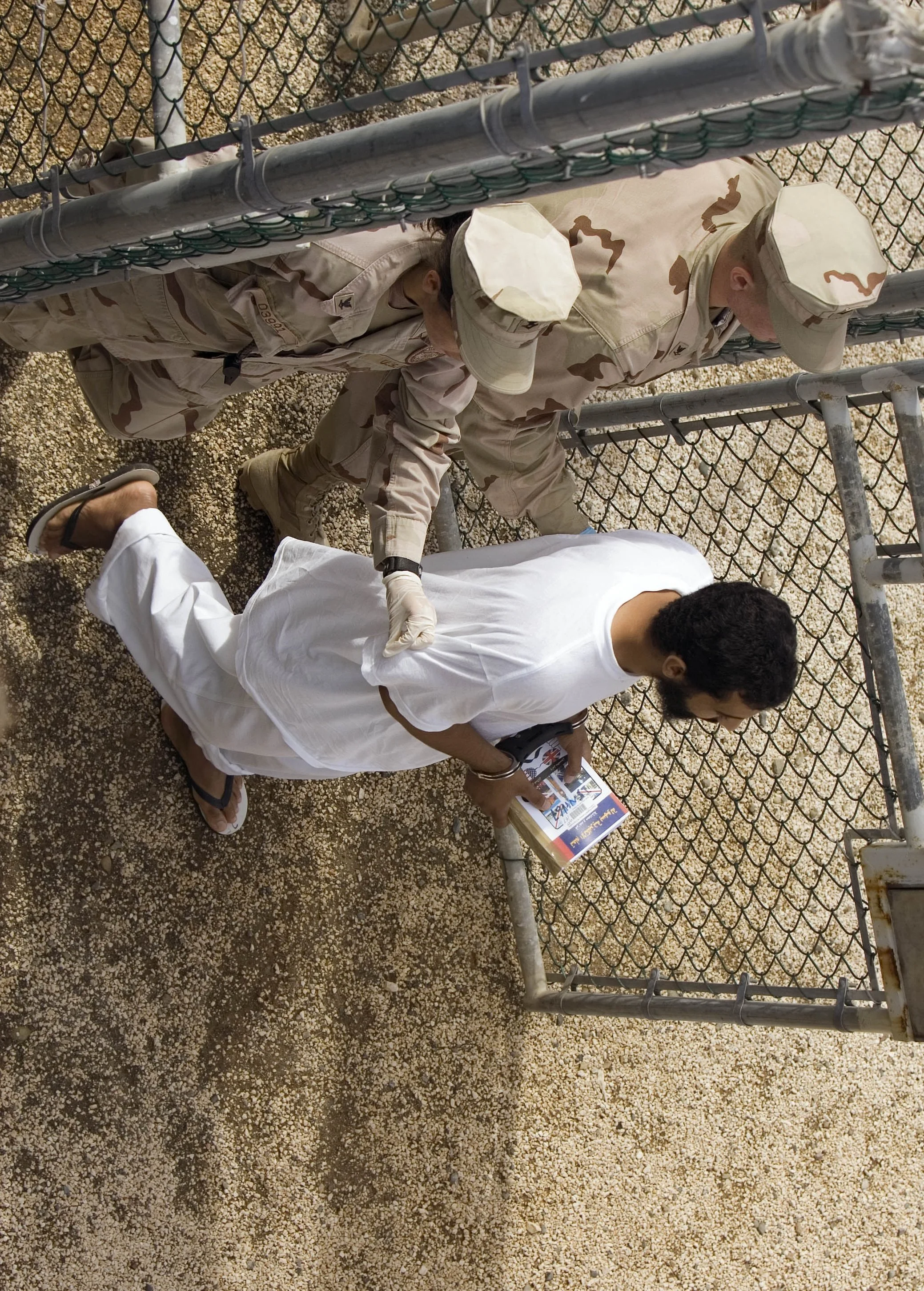
“What patterns in documented cases involving Muslim defendants and detainees across different jurisdictions, reveal about the interaction between religious and cultural vulnerabilities, psychological vulnerability and coercive interrogation practices?”
We investigate documented cases involving Muslim defendants and detainees to explore the ways religious and cultural identity can intersect with psychological vulnerability and coercive practices. Particular attention is given to the impact of prolonged detention, interrogation, torture, and other forms of psychological or physical pressure on memory, cognition, sense of identity and overall psychological wellbeing.
Drawing on psychological literature alongside the experiences recorded in these cases, this work aims to illuminate the human cost of coercive detention and bring greater attention to the ways such environments can affect a person’s mind and sense of self. Through this evidence, we hope to support greater awareness, stronger safeguards and more informed, meaningful advocacy for those affected.
Some of the most valuable insights come from those who have lived through the realities we seek to examine.
If you have a unique perspective, lived experience or professional expertise relevant to our current research areas, or would like to volunteer your time and skills to help advance our work, we welcome you to get in touch.